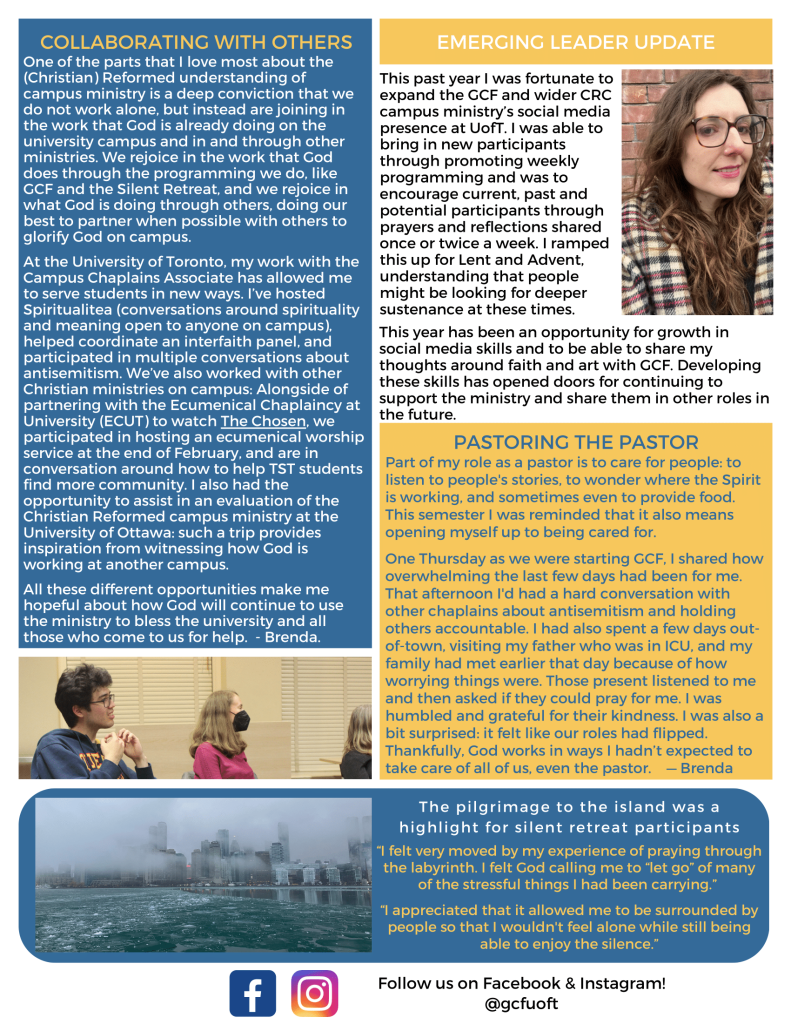
The following is our year-end newsletter. You can also look at it in pdf format.
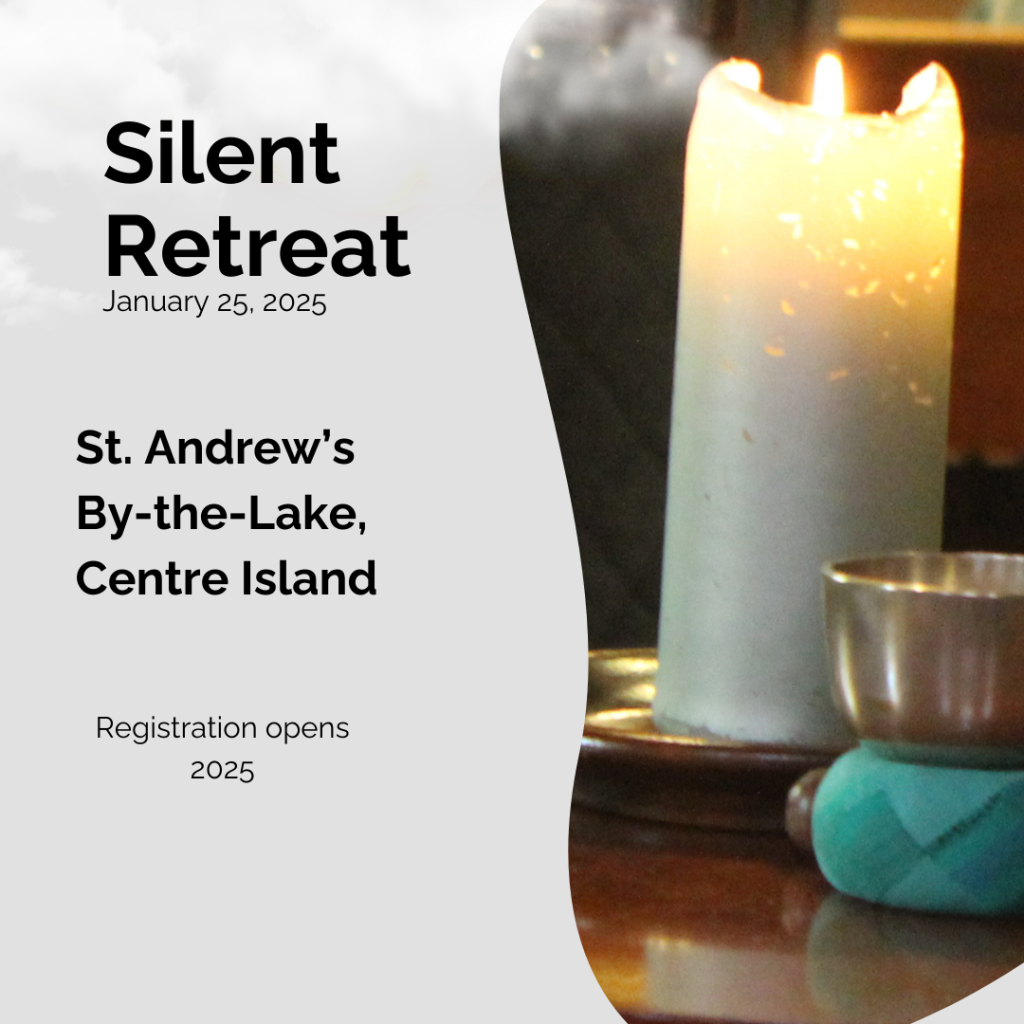
January 25, 2025 from 10:00 a.m. to 4:30 p.m. at St Andrew’s By-the-Lake Anglican Church, Centre Island
Looking for some calm, quiet space in the midst of your busy life? Interested in a time of being still with God in a beautiful place? Every year, our campus ministry hosts a silent retreat: a day in which we invite you to set aside some time and space to listen and reflect. This year we will once again meet at St. Andrews By the Lake Anglican Church on Centre Island. We invite you to join us for our Silent Retreat on Saturday, January 25, from 10 am to 4:30 pm. The retreat is open to all those connected to the campus ministry community or at a university here in Toronto, so feel free to forward it to others who might be interested.
For an impression of last year’s retreat, see this Instagram post.
The day will begin at 10 am with coffee/tea and scones followed by a time of prayer and entering into the silence together at 10:30am. The day will unfold in silence, including a silent lunch together and a quiet afternoon coffee break. We will gather at the close of the day to end our silence together and reflect on our experiences. Carol, one of the campus ministers, will be available for pastoral conversations during the day if things emerge you need to talk about.
As we are meeting on Centre Island, you will need to catch the Ward’s Island ferry (round-trip ticket $9).
Some reading material and resources will be available for those who want them on the day. Please feel free to bring along any items that will deepen the experience and the silence for you. Suggestions include a journal to record any of your reflections, a Bible, devotional materials, poetry, art supplies and/or books on faith. Additionally, you can take time outside on the beach or walking around Centre Island, or do the labyrinth on the church grounds.
Registration will open in January 2025. The cost for the retreat is not yet determined, but should be under $50.00, which includes lunch and two coffee breaks.
We hope you will join our community for this day of intentional quiet – to give space to reflect on what our hearts are telling us, and encounter the presence of God.
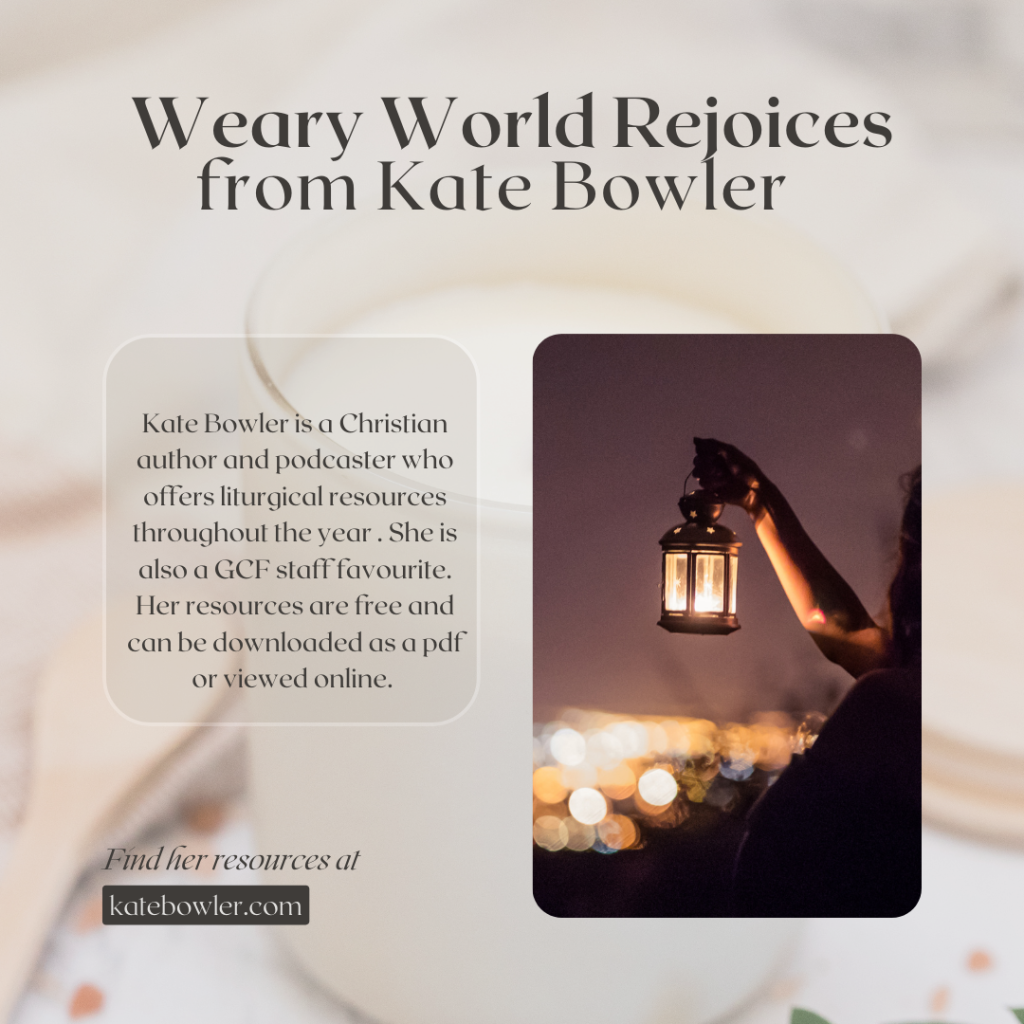
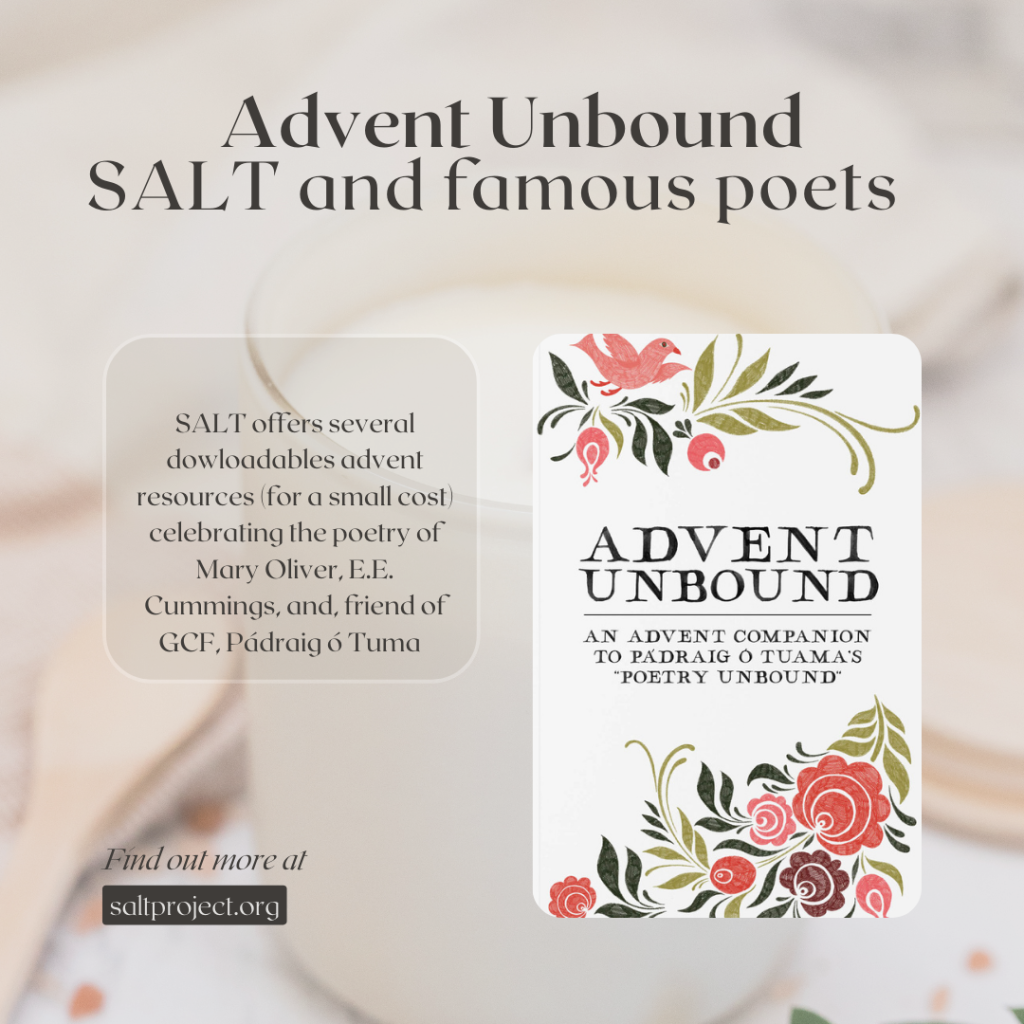
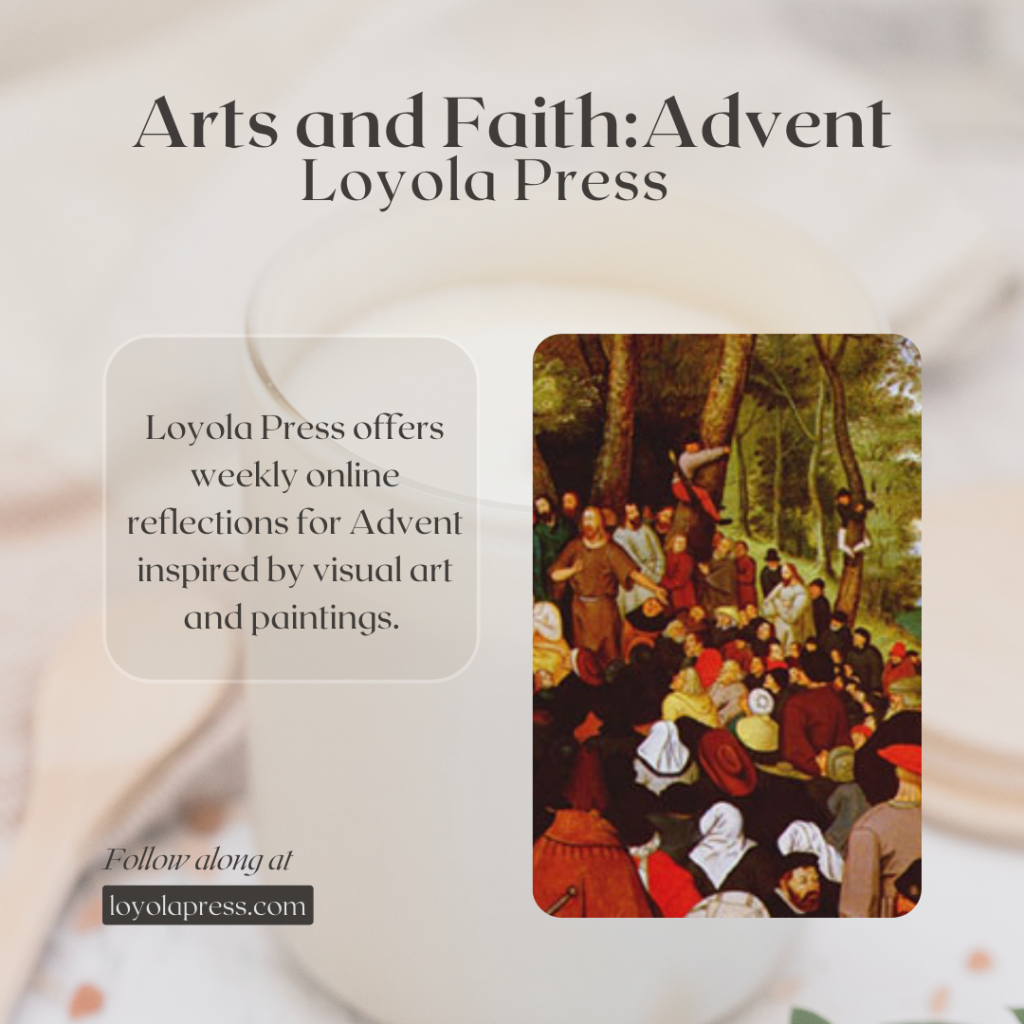
With advent just around the corner, we’ve drawn up a list of some our favourite resources for the season. With some free and paid options, these resources come from a range of Christian artists and writers, and engage with poetry, visual art, spiritual practices and anti-consumerism.
We hope you find something that helps you engage with the season of watching and waiting.





As we start our gatherings, we “acknowledge the history, spirituality, culture, and ancestral stewardship of the land on which we regularly meet by the Huron-Wendat, Haudenosaunee and Anishinabek Nations, and the Mississaugas of the New Credit First Nation.” We continue our land acknowledgement with words that one of our emerging leaders helped us adopt several years ago: “we commit ourselves to seeking to live out the Good Way, which encompasses both love and humility as we bravely journey towards the justice which Jesus proclaimed with his words, life, death and resurrection.”
Our land acknowledgement recognizes our complex histories of the land on which we live and gather and reminds us of our desire to learn from other cultures. One way we as a community have chosen to more actively learn from Indigenous wisdom is through using the First Nations Version of the Bible, which is an Indigenous translation of the Bible. Using a different translation of the biblical text can be helpful for hearing the text in a new way; furthermore, the use of cultural norms and words that are different from what many of are used to can challenge our assumptions about what the text means.
As we have been using this version of the Bible at our gatherings these past few years, many people have commented on how the translation uses descriptions for names, such as Creator Sets Free (Jesus), Bitter Tears (Mary), Father of Many Nations (Abraham) and House of Bread (Bethlehem). Such descriptions may feel distracting at times but most of us have found them helpful, as they provide us with extra information for understanding the biblical text, including the meaning of the words in the original language.
Using the First Nations Version of the text is a simple and concrete way of acting out our desire to learn from Indigenous voices. We are hopeful that the Holy Spirit will work in and through this translation to allow many to grow in appreciation of the Bible and how we can learn from other cultures.
Brenda, on behalf of the Christian Reformed campus ministry, participated in a Palm Sunday service for all CRC churches this week. She was asked to offer a prayer of confession, which is given below.
Gracious God,
Life can be hard, and we often feel confused and disoriented.
In our desire to fix that disorientation on our own,
we have turned away from those who bring us more confusion:
those with different languages, culture, or backgrounds;
those who ask questions and have ideas that unsettle us.

In our desire to create a safe and comfortable place for us and our people,
we have often excluded those who are different from us,
and we are saddened by our actions.

O God, "our sins are too heave to carry,
too real to hide, and too deep to undo.
Forgive what our lips tremble to name,
what our hearts can no longer bear
and what has become for us a consuming fire of judgment.

Set us free from pasts that we cannot change;
open us to futures in which we can be changed;
and grant us grace to grow more and more in your likeness and image;
through Jesus Christ, the light of the world." Amen
The second half of the prayer is a quotation of the prayer in Lift Up Your Hearts 636, which was adapted from Book of Worship (United Church of Christ)
It has been a season of transitions and a season of trying new things again. We are thankful for God’s presence with us and how God has been working in and through the ministry.
To view our end-of-year newsletter, follow this link.
Deb has taken on a new job with the Anglican Diocese and has thus left the campus ministry staff team. We are sad to see her go, but we are also hopeful about how the Spirit will use her gifts to bless the church in new ways.
The following is a letter from Deb with more about her endings and new beginnings. Following that are some words of thanks from Peter, who is a long-time participant in the Wine Before Breakfast community and a member of the campus ministry supervising committee. We invite you also to pray the blessing he shares at the end. – Brenda Kronemeijer-Heyink
Hello friends, near and far, new and old…
Some of you have heard the news, but to make it official, I am taking over Brenda’s usual communication to our vast community to let you know that my time with the CRC Campus ministry team is coming to a close. I’ve accepted a position with the Anglican Diocese of Toronto as a consultant on a team focused on congregational development, working with the numerous parishes in Toronto’s massive diocese. While I know I have so much to learn, I am feeling quite confident about what I can contribute to this work, which begins on November 1st.
It really does feel like the end of an era as I shift gears and prepare to leave campus ministry. I found Wine Before Breakfast at a different time of transition in my life: my faith in and curiosity about Jesus, the Bible and Christian community had me feeling a bit at odds with the church I’d grown up in. I was in pursuit of a career as a singer-songwriter and trying to save up enough money to go back to school and get that degree in Canadian literature I’d started once-upon-a-time. Gradually my attendance at church faltered, but not because my faith was diminishing -it just had me yearning for something different. That yearning was satisfied when I arrived at Wine Before Breakfast for the first time in September of 2009. Not only did I find a faith community that was going to hold my questions, my doubts and my laments, I found a community that knew exactly what to do with a singing, song-writing young lady who catalogued pivotal moments of her life in playlists (we called them mixed CDs back then) and wanted to belt out anthems written by the lyrical prophets of our time, their words resonating with those of the prophets all through the scriptures. I attended Wine Before Breakfast only once before joining the band up front, and I stayed there for the next 14 years.
I never did get around to finishing my degree, but I did become a regular fixture on campus, and I definitely got an education. I don’t know where to begin describing the impact this campus ministry community has had on me, but I can tell you it has shaped me deeply as a person, and a minister, of faith. It has offered me countless opportunities to work and worship in an interdenominational capacity; to push at the boundaries of what a church service can look like; to make more room for people who want to radically examine and practice Christian faith; and to understand that weirdos like me can and should belong. In fact, it’s my participation in ministries like Wine Before Breakfast that have prepared me so well for the new ministry that I am moving onto. And while Wine Before Breakfast has wound down, in the capacity that many of us has known it to be, I will never think of it as anything but a successful ministry. I know I will tell its story over and over again as a testament to the way God can work in unconventional ways, and through unconventional people.
This has been an extended season of change for the ministry, that has included both joy and sadness, and is a large part of my own season of change. But I want all of you to know how grateful I am for this ministry and for your part in it -whether as an attending student, service participant, a donor, a staff member or committee member. This has been an impactful and ground-breaking community over it’s 20+ years, thanks in no small part to the contributions of all its members. Even though Wine Before Breakfast is no longer a weekly service, it remains a community of people whose faith is both peculiar and profound as a result of all God has done, and will continue to do, in us.
So thank you, my friends. I covet your prayers in this next stage of my life, and hope you know you can count on mine. May you remember that we are bound by the love of God, after which we have honed our love for each other. I don’t know what song is ringing in your ears right now, but in mine, I hear the words of Alexi Murdoch’s Orange Sky: “In your love, my salvation lies.” Always.
-Deb Whalen-Blaize
Reflections from Peter regarding Deb’s contributions to Wine Before Breakfast
I believe very much that Deb’s time with this ministry had a profound effect on her. And I think Deb’s musical ministry at Wine Before Breakfast had an equally profound effect on those who attended. I know it had a profound effect on me. Deb’s musical selections and singing, especially in those opening and closing songs at Wine Before Breakfast, resonated so well with the liturgy and spoken word ministry of those leading or preaching, as well as her own sermons.
For me, that musical ministry was something that immediately drew me in the very first time I attended a WBB service. One of the earliest song’s Deb did that stands out for me was Josh Ritter’s Thin Blue Flame. Another song that stands out in my memory is another Josh Ritter song that Deb sang on the Tuesday following the shooting death of Adam Wood, In the Dark, with its chorus of “Don’t you leave us in the dark”, and then Brian turning out the lights in the chapel as you started to sing. And I’ll always remember Deb’s acapella rendition of U2’s Bloody Sunday, on a Tuesday evening following a bloody mass shooting at a Florida nightclub. And Deb’s tearful rendition of Martyn Joseph’s Whoever It Was That Brought Me Here (Will Have to Take Me Home), the final closing song at the last WBB in August.
One of the traditions at Wine Before Breakfast was the laying on of hands during the “Prayers of Leave-Taking and Commissioning” for those leaving WBB. I wish we all could have given Deb that leave-taking prayer in person. In lieu of that I’ll end this with the closing words of that prayer (which all reading are invited to share):
Go forth, dear friend,
with our blessings and with our prayers.
Go forth in the power of the risen Christ.
Go forth and bear witness in all that you do,
to the love of God,
the redemption of Christ,
and the comfort of the Holy Spirit.
In the powerful name of Jesus,
Amen, Alleluia!
This post was originally sent out as an email to the campus ministry community.
As we wrap up our 54th year of encouraging students to engage with their faith on campus, we are thankful to once again share how God has been working in people’s lives and at the university. Through the pastoral work we do and the programs we offer, we challenge, mentor, and enable students to think, work, and live as Christian disciples in the academy and in their professions. Through wrestling with Scripture and difficult topics, we invite people into radical Christian discipleship, inviting them to rest in the hope of Christ and to participate in God’s work of bringing justice.
The following is an example of one way that we’ve been blessed to see God work:
During the pandemic, one of the grad students now participating in our ministry experienced a time when she was deeply overwhelmed. One evening she called out to Jesus and felt God’s presence in response. After this encounter with God, a friend encouraged her to connect with the ministry as a means of growing in faith. She started attending Wine Before Breakfast and soon became part of Graduate Christian Fellowship. Through her participation in the ministry and pastoral conversations with the campus ministers, she grew in her understanding of how God was inviting her into radical Christian discipleship in all of her life.
This spring she was baptized at a local church during their Easter Vigil. What makes her baptism even more special is that her baptism class was led by Andrew, who has himself been significantly shaped by Wine Before Breakfast.
To read an update about the ministry and more stories of how God is working in and through the ministry, read our spring newsletter.
The retirement celebration for Brian was another reminder of how God works in and through the ministry to touch the lives of many people. In case you missed the service, you can watch it here. The service starts at 11:50, speeches in honour of Brian start at 2:09:28.
Jonathan Haidt, made infamous for his article on trigger warnings and coddling of the American Mind, was recently in the news again concerning the well-being of teens and young adults (see article, and Haidt’s own words in article1 and article2). The argument once again points to social media as playing a significant role in the well-being of youth (see also Twenge’s now famous article on whether smartphones have destroyed a generation).
Another part of Haidt’s argument about the decreased well-being of young adults is his articulation that certain ways of thinking, “say identifying with, or privileging victims and a victim status, tends to disempower people because it puts someone else in charge of your life.” (Robinson) While we should acknowledge that many of us, and some more than others for various reasons, have been and continue to be victims of unjust behaviour and/or institutions, the problem comes not from recognizing that we are victims, but by allowing being a victim to become one’s sense of identity. Victims have limited agency and there is limited focus on resiliency. Without conversations about resilience and agency, people are more likely to become depressed.
While this is an interesting conversation to be had in terms of how such thinking is affecting young adults, especially at university, it’s also an interesting conversation in wondering, like Robinson, “if there is some cross-over to all this in churches.” Have we lost our sense of agency in the church? Or, more accurately, have we forgotten God’s agency?
Robinson notes that in the “more liberal and progressive church context, there’s a lot of emphasis on the problems of the world, and on what you should be doing about it. Which begins to sound a lot like law, not gospel. It’s all about what you should do or feel or think. If God is in the picture, it’s about what God needs us to do, demands that we do. There’s little emphasis on what God has done or is doing on our behalf or on God’s capacity to bring good out of or in the face of evil. So it’s kind of all on us.”
That sounds exhausting and debilitating.
In a world where so many are exhausted and overwhelmed, when we feel like we have too little agency and too much responsibility, church can’t be a place that tries to give us more of that. Church – and all Christian organizations – need to be places of grace and hope.
Please pray with us that we in the ministry might indeed be one of those places where we extend grace and help people hope.