A prayer for higher education

The following prayer Interceding for Those in Higher Education is an adaptation from a prayer written by Emily Umulis and posted on the Women Scholars & Professionals website. We are using it at the first GCF of the year.

Lord, you are present to your people throughout the world. You have called us to learn, love, and serve within the universities where you’ve placed us. Hear us now as we bring them to you.

Lord, we pray…

  1. For the leaders in higher education, including presidents, provosts, governing councils, deans, department heads, and all who manage internal operations and external relationships that influence the flourishing of the University of Toronto: give them wisdom as they navigate complex systems. May the decisions they make and the actions they perform nurture the well-being of the university and the lives of the people within it.
    • We pray, both aloud and in silence, for the leaders we know:
    • “Lord, hear our prayer.”
  2. For faculty who teach, mentor students, conduct research, and take part in various service obligations balancing day-to-day tasks with pressure to achieve in an increasingly competitive environment: give them insight as they order their days, create boundaries between work and life, and prioritize the demands on their time. Fill them with wisdom and grace as they bring words and influence into people’s lives and engage in research that furthers our understanding of your world.
    • We pray, both aloud and in silence, for the faculty members we know and work with:
    • “Lord, hear our prayer.”
  3. For graduate students who often work countless hours in solitude, studying a topic few people in the world understand, and feel caught between their own needs or desires and the power structures in which they live and work: give them peace and hope. Fill them with a sense of your presence and connect them with others in meaningful ways.
    • We pray, both aloud and in silence, for the graduate students we know and work with:
    • “Lord, hear our prayer.”
  4. For undergraduate students who are often both excited and overwhelmed as they navigate new independence and spaces of need: meet their longing for beauty with your presence, ground their identity in your love, and breathe your Spirit into all the ways they long to impact the world.
    • We pray, both aloud and in silence, for the undergrads we know and work with:
    • “Lord, hear our prayer.”
  5. For those who serve the University without long-term titles, including adjunct faculty, operations managers, grounds and cafeteria workers, who navigate power systems in which they are not at the top and serve in positions that are often overlooked: provide financial stability, open their eyes to see the impact they have, and speak truth and justice into the systems that affect their lives.
    • We pray, both aloud and in silence, for the we know or have seen at work on campus.
    • “Lord, hear our prayer.”

Lord, we bring to you the places where you have called us and the people there. Fill us with your Spirit, bless the work of our hands, and make us to be a redeeming influence in our classrooms, departments, and universities. May your kingdom come and your will be done on earth as it is in heaven. Amen.”

Lenten Resources

Lent often starts in the middle of mid-terms and when the most difficult assignments are due. This year, we mark Lent at a time of global instability and the stripping of rights for many people. The practice of giving something up can seem like an added burden during an anxious or stressful time, but Lent can also be a seaon to try a new spiritual practice like daily prayer or meditation. 

The following are some resources for you this season. Be blessed.

Lenten Lord of the Rings

A reading plan and daily reflection based on reading through the Lord of the Rings over Lent. Good Friday alligns with Frodo’s ascent of Mount Doom. (Free)
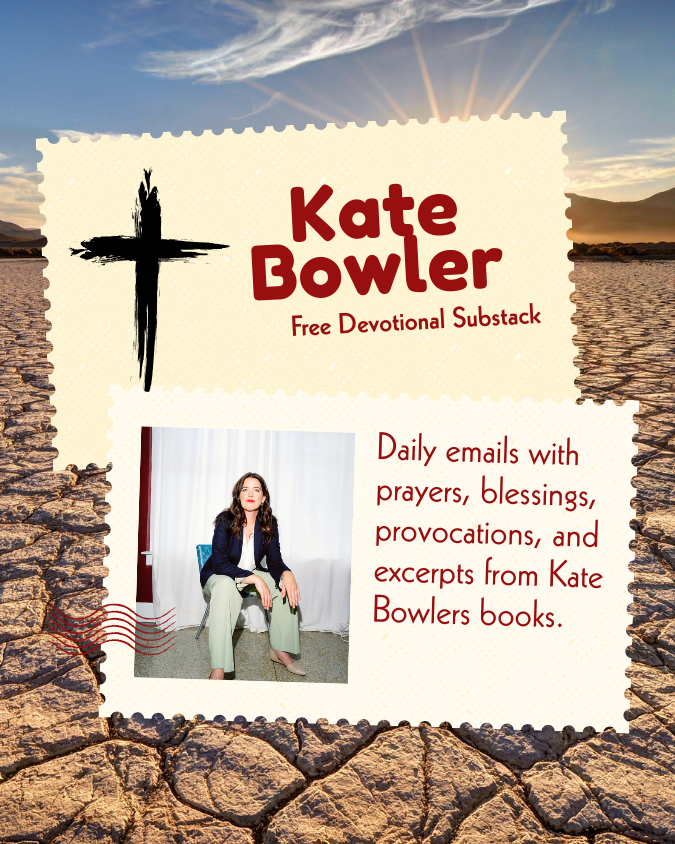
Kate Bowler

GCF staff favourite Kate Bowler offers her Lenten devotional through Substack. Sign up through her website. (Free)
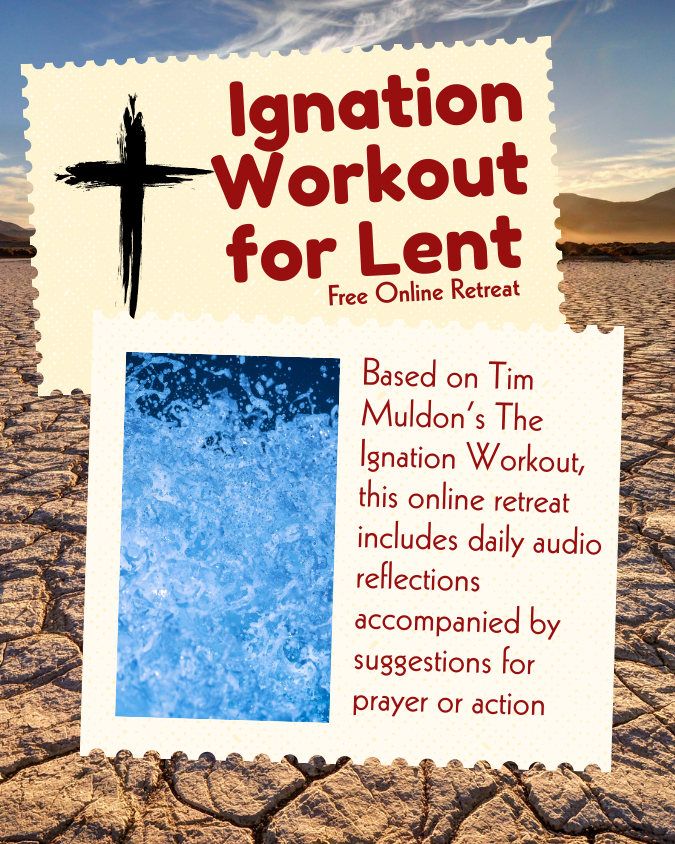
Ignatian Workout for Lent

Discover Ignation practices each Monday when Tim Muldoon shares audio reflections and suggestions for prayer and action throughout the week. (Free)

Seeking God’s Face

This “daily office prayer and devotional  posted daily to the Seeking God’s Face blog, takes excerpts from the book of the same name by author Phil Renders, who recently spoke at GCF about his work with the Habitus Community. (Blog – free; Book – paid) 
Life Stories (Madeline L’Engle)

This downloadable resource from the SALT project is a 40 day devotional featuring biblical passages alongside excerpts of her memoir Circle of quiet. (Paid)
Wild Paths of Peace 

This free resource from Alongside Hope (An Anglican organization) can come as a daily email or you can download the entire resources as a pdf. (Free)
Lectio 365: Desert Fathers and Mothers

Lectio 365 is a free daily prayer app. The Lent 2026 morning prayers are inspired by the Desert Fathers and Mothers, entering into themes of discipleship, spiritual rhythms, and practices. (Free)
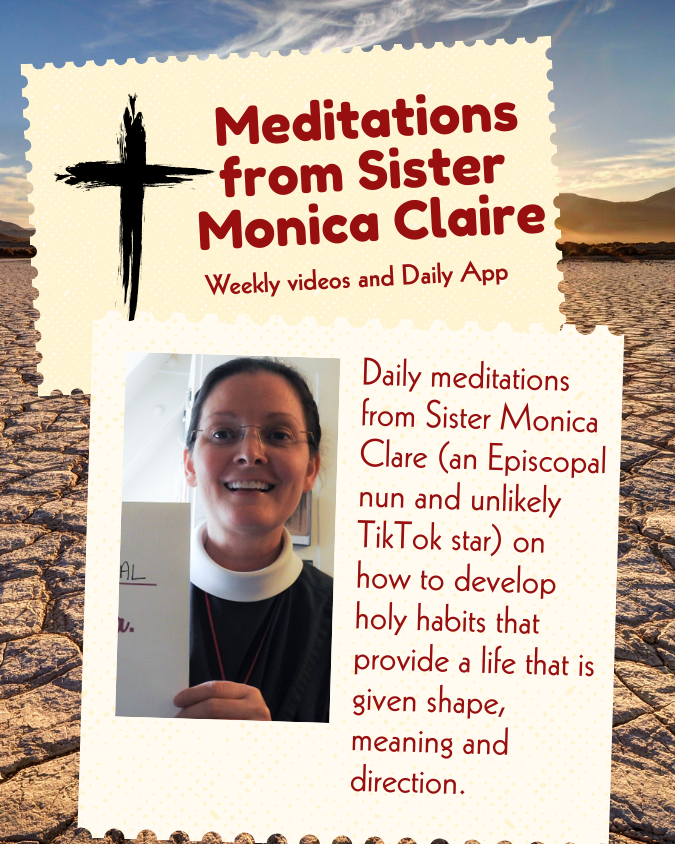
Meditations from Sister Monica Clare

These daily Lenten meditations come straight to your inbox from Sister Monica Clare, an unlikely tik tok star and Episcopal nun. These meditations will inspire you to build “Holy Habits” as you reflect on the themes of lent. (Free)

Pub Theology as an opportunity to explore

We’ve been hosting a variation of pub theology (or Spiritualitea or Divine Discourse or now Soup for Thought) in Toronto for several years now (and several more before that at Michigan State). It’s an opportunity for people to talk about how faith and spirituality interact with current events and topics of interest (e.g., sexuality, racism, politics, technology, etc.). Pub theology is a place to learn how to listen to each other and make space for people who see the world differently from me. Its intent is not to convince people of the Christian position but instead to facilitate people learning from each other, being both encouraged and challenged that there is more than one way that Christians (and others) have approached difficult topics. 

Pub theology has also been a place where people who are exploring Christianity can join us, and we’ve been delighted by how God has brought different people from different backgrounds to our conversations. People are free both to lament negative encounters with Christians and to ask pointed questions about what believing in God looks like. It is meant also to be a safe place to have one’s own views about Christianity and the Bible be refined.

Bryan Berghoef, who originally started pub theology, wrote an article about how pub theology might seem like a waste of time. After all, what real good does sitting in pub talking to other people really do? But Berghoef suggests that:

“One might be tempted to ignore or skip such a practice [of pub theology] in favor of ‘doing more’. But when I skip it, I miss out. I miss out on learning from people with experiences and perspectives that are vastly different from my own. I miss out on constructive dialogue on issues we all face together. When I am tempted to abandon the practice, I remember that for some folks, this is a first step toward re-engaging their spiritual side, or their first chance to speak honestly about their doubts, and is perhaps their only opportunity for deep, constructive dialogue and reflective thinking. . .

So is pub theology just talk? Yes. And no. It is deep relationships. It is barriers coming down. It is stereotypes being proven wrong. It is new friendships occurring. It is lines being crossed. It is deep thinking about the issues we all face as humanity, being discussed from varying perspectives. It is a movement to deeper understanding, where new possibilities are opened up.

”Bryan Berghoef, “Pub Theology is a Waste of Time.” (January 2014)

originally posted as Pub Theology as an opportunity to explore | Campus Edge Graduate Christian Fellowship

Advice for those striving to be Christian scholars

Nicholas Wolterstorff’s article with advice to those who would be Christian scholars speaks of the inherent challenge of critiquing the university while also loving and embracing it. He starts by speaking of three postures people have in relation to the university:

1. “Some assume that what goes on in the contemporary university is pretty much OK as it is, and they look for ways of supplementing that with some distinctly Christian thought and activity.”

2. “Some believe that what goes on in the contemporary university is pretty much OK. . . they find tension between Christianity as they understand it, and what goes on in the university; so they propose revising Christianity until the tension disappears. Often this takes the form of what I call a “band wagon approach.”

3. Some “Christians, usually outside the university, who are content to lob grenades at the contemporary university. The university, they say, is godless, aggressively secular, reductionist, relativist, liberal, post-modern, captive to political correctness – you name it.”

Wolterstorff recognizes that each of these positions has a part of the truth but is ultimately lacking. He advocates instead for a different way of looking at what it means to be a Christian school, arguing that “the project of being a Christian scholar is the project of thinking with a Christian mind and speaking with a Christian voice within your chosen discipline and within the academy more generally.” I encourage you to read his articulation of what this looks like in practice.

originally published Advice for those striving to be Christian scholars | Campus Edge Graduate Christian Fellowship

Thoughts on Sabbath

Tonight we are talking about Sabbath at Graduate Christian Fellowship. As preparation, I glanced through MaryAnn McKibben Dana’s book, Sabbath in the Suburbs. I read the book a number of years ago when I first became a parent and found it deeply encouraging. While I love the idea of Sabbath as being restful and contemplative, the reality is that it’s hard to stop from the pressures and realities of the rest of life (and when you do stop, doing nothing or binging feel like the best activities). And practising Sabbath can be hard, whether you are a parent of a small child or a single person. Dana’s book felt like a gift, a recognition that some things are worth trying to (continue to) do, even if/when we can’t do them at the level we think (or feel pressured) to do.

The following are a number of quotes from the book to provide encouragement and fodder for thought, in the hopes that they help you imagine practising Sabbath in your life:

  • Sabbath as a “day of giving up trying to change things;” a day of “not trying to improve oneself: no progress” (15), a day when we have all the time in the world, to be fully present;
  • it is ” a disruption in the liturgy, a break in the rhythm” (28)
  • a day of wonder and delight (even with food); a day “free of obligation and ‘should'” (33)
  • Sabbath hacks:
    • work/errands are sometimes necessary, but doing it differently: slowly and intentionally, unhurried, contemplatively;
    • “find the one most important thing that must be done and to put parentheses around it in order to protect the rest of the day.” (98)
    • “another approach to Sabbath – to go about one’s day as usual, even if that includes work or errands, but to fast from one thing.” (85)
  • It can help to create a list of possible Sabbath activities, including trying something new or novel; such as “pursuing an unfamiliar or nonroutine task” (75)
  • “the Jewish Sabbath emphasizes bringing one’s best self to God… but maybe we also show respect for the Holy in our lives when we bring our real selves, not our clean and made-up ones.” (107) a day to be our authentic selves, without the mask or being ‘on’
  • “Sabbath feels like a dance between the impulse for togetherness and the needs of the individual.” (110) This challenge is different but just as true for those who are single.
  • a day to “help me remember that I’m not God… help me not to be consumed by good work.” (115)
  • “on one day, we should do our utmost to let go of the annoyance and anger – even anger at things we’re justified in being angry at.” (122)
  • a pre-Sabbath prayer: “what has been done has been done, what has not been done has not been done; let it be.” (128) from New Zealand prayer book
  • a day “to make time our friend, not our enemy” (42) of “trying to make time my friend again – a real friend, not the friend I only call when I need something.” (135)
  • “letting one thing go each day is a way of acknowledging that perfection will always be beyond me. It also helps me find a little bit of Sabbath each day.”(135)

Some reflections from Dana on her experience:

  • Dana: “Sabbath seems designed to make life as inconvenient as possible…. Sometimes, I can see a holy purpose iin the inconvenience. Other times, I’m just annoyed.” (83)
  • Dana had thought Sabbath would provide rest so that she could do more, but Sabbath isn’t so we can pack the rest of our week; “Sabbath is making me want to do even less the rest of the time.” (91)
  • “There isn’t ever enough time. Even when we strip away all the inessentials – even when we focus only on the things that are good and nourishing and important for ourselves, our families, and the world – there is still not enough time. But our hope is not in there being enough time but in there being enough grace to muddle through the scarcities or our days.” (150)

The Well also provides several helpful reflections on the Sabbath:

Advice for Grad School

The Well has posted two articles with some advice for those in grad school. They are especially helpful if you’re in a place where you’re wondering about how you might flourish more fully in grad school.

Amy Whisenand challenges us to take care of our bodies, make friends, let go, and celebrate the good. She shares that, while her habit of “exchanging sleep, a healthy diet, and exercise for long hours in the library studying, reading, and writing papers” brought much success in her time as an undergraduate, she realized that if she “wanted to sustain this life of the mind, she needed to take care of herself as a whole person, including her body.” Secondly, her experience has been that that “a wide variety of kinds of friends — collegial friends, hanging out friends, mentors, close friends — greatly increases the quality of the graduate school experience.”

Amy Webster provides similar challenges: make good friends, choose your advisor wisely, bring yourself to your work, and keep the big picture in mind. Keeping the big picture is not only in relation to your work (e.g., “it’s easy to chug along with experiments and analysis without thinking about the big picture”) but also in all of life. She points out that one needs to keep time for non-work things and learn how to

“say no to things that are distracting from your main pursuit. . . Saying no may require a difficult conversation, or it may just be a quick email. (And on that note, learn to write quick, to-the-point emails without over-analyzing them. This is a great life skill.) It is important to prioritize your time for what you consider to be the deep, important work.” 

Both Amy W.s highlight celebrating – celebrating milestones and celebrating all of the good that has happened, both to yourself and others. Practice in celebrating the good also helps you have perspective when you face the difficulties of grad school (e.g., “rejections from jobs or journals, difficult interpersonal dynamics.”) In all of this, “Remember that your worth as a human being is not tied to your graduate school success (a truth even when things are going well).”

originally posted as Advice for grad school (from people who’ve been there) | Campus Edge Graduate Christian Fellowship

The Crisis of International Students in Canada?

“On Friday, November 14, 2025, Global Scholars Canada hosted its 3rd Annual Word & World Symposium entitled “The Crisis of International Students in Canada and Christ’s Call to Peacemaking.” International students make up 30% of Canada’s enrolment in colleges and universities, which has created a complex of crises in Canada, triggering a largely negative response from the Canadian public and significant policy shifts from the Canadian government.”

One question raised was this: are international students a crisis, or do they present Canadians with an opportunity? Specifically, is there an opportunity here to serve, to learn, and to make peace in our troubled world?”

Speakers at the event included:

  • Dr Ruth Hayhoe, “50 years of Student Exchange”
  • Yixin Jiang, “Intensification of Institutional Procedures”
  • Isaac Bekoe, “A Personal Story, coming from Ghana”
  • JesusMiracle Chiadika, “Mental Health and Mental Illness”
  • Dr. Gang Li, “Sojourners Within Your Gates,”
  • Dr Grace Karram, “Off-Campus Supports”

See summaries of the talks, including responses, at The Crisis of International Students in Canada: An Opportunity for Peace in a Troubled World? by Peter J. Schuurman

Advent Resources

Advent Resources for 2025.

Taizé Meditations, Prayers, and Blessings

A collection of songs and prayers in the Taizé style for contemplation throughout Advent.

Seeking God’s Face

A daily, contemplative devotional, rooted in ancient traditions of Divine Office and lectio divina, with daily posts to their website.

Keening for the Dawn:

Weekly Zoom course with Brian J. Walsh

Taught by former chaplain Brian J. Walsh, this weekly course will have teachings about Advent, lament, and song, with opportunities to ask questions in the chat.

The Coming Light: Daily Devotionals

Delivered every day to your inbox, the Advent Reader considers the Hopeful Presence of Jesus in Advent.

Kate Bowler

This year Kate Bowler is providing these free daily devotionals through her Substack. Register at katebowler.com

Trans Advent: Resource from Unbound

Free daily devotionals written and inspired by trans people of faith, from Unbound:Intersections of Faith and Justice.

Advent Conspiracy

Free and paid resources about celebrating Advent and Christmas humbly, beautifully, and generously.

Jan Richardson: Poetry and Blessings

One of Carol’s favourites, Jan Richardson has several books of poetry and blessings for the liturgical year, including Advent and Christmas. See some of her blessings on the GCF Instagram feed every week.

The Gift of Advent

Inspired by the True Gifts of Christmas by Megan Alexander, these free devotionals from Loyola press come to your inbox daily.